



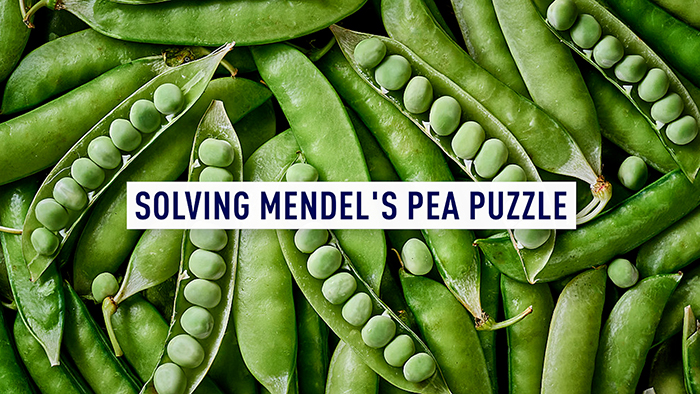
More than 160 years ago, Gregor Mendel planted the seeds of modern genetics with a series of pea plant experiments that changed science forever. By observing how specific traits were passed from one generation to the next, he uncovered the basic laws of inheritance—long before the concept of genes was even known.
In a remarkable feat of international scientific collaboration, researchers from China and the UK have finally unraveled the genetic secrets behind three of Mendel's most puzzling pea traits. Led by Professor Cheng Shifeng of the Agricultural Genomics Institute at Shenzhen (AGIS) and scientists at UK's John Innes Centre (JIC), the team has uncovered the exact genetic mechanisms behind pod color, pod shape, and flower position—traits that had remained unsolved since Mendel's 19th-century experiments.
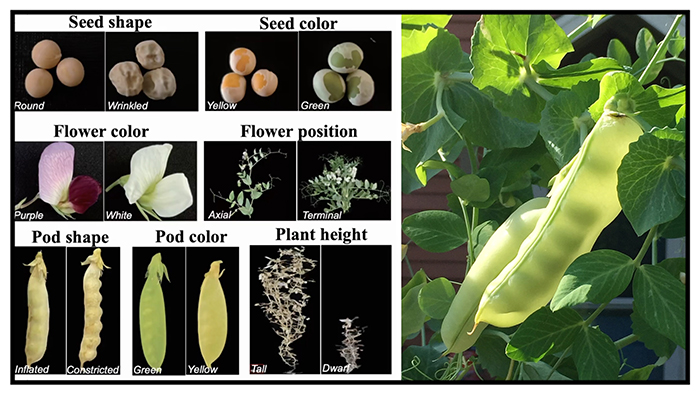
Mendel's seven pea plant traits. / AGIS photo
Having analyzed over 700 pea plant varieties, the team found that the yellow color in pea pods results from a large genomic deletion affecting chlorophyll production, not a simple gene mutation as once believed. For example, instead of a single faulty gene causing the yellow color, a missing stretch of DNA disrupts the plant's ability to complete the final step of chlorophyll production—the process that gives plants their green color.
They also revealed that pod shape is controlled by two functionally linked developmental genes, working together like co-designers shaping the structure of the pod, and that a gene encoding a co-receptor-like kinase determines flower position, acting like a signal guide for where flowers should grow.
In addition, the team also identified genetic markers for 72 agronomic traits—creating a valuable resource for crop breeders. These insights will enable the use of AI-powered breeding tools to improve pea varieties, enhance resilience, boost yields, and finally reshape sustainable agriculture.
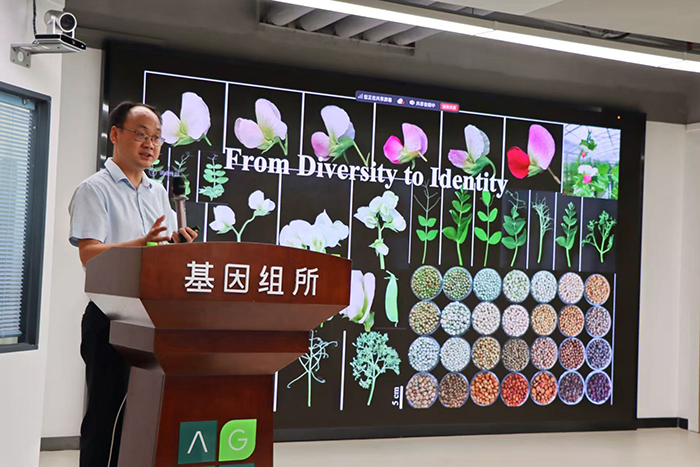
Cheng Shifeng at press conference on April 24, 2025. / AGIS photo
Professor Cheng Shifeng highlighted that the project's success relied on introducing a diverse international seed collection, including all of Mendel's traits and rare mutations. By planting in both northern and southern China, the team gathered rich data across two growing seasons, complemented by historical UK records.
Dr. Noam Chayut, head of the Germplasm Resources Unit, together with Professor Noel Ellis, a senior scientist with decades of experience in pea genetics, led the effort to gather a diverse and representative collection of pea plant varieties at the JIC.
"The genomic layer of information that we added brought so much information to this collection. We can make a huge leap forward in terms of how we can apply it for food security in Europe, in China and around the world," said Dr. Noam Chayut, an applied crop geneticist leading the Germplasm Resources Unit at the JIC.
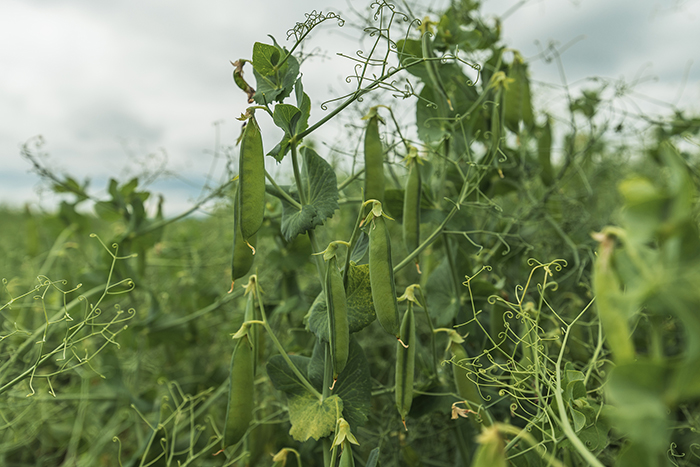
Peas in the field. / CFP photo
With global food security under increasing pressure from climate change, environmental degradation, and population growth, the ability to breed more adaptable, nutritious, and productive crops is more crucial than ever. This discovery not only completes a long-standing scientific puzzle but also unlocks new possibilities for precision agriculture, offering powerful tools for crop improvement in a rapidly changing world.
"There's still a huge amount of data that we can still analyze, and this collaboration has a great deal of potential yet to be realized," added Professor Noel Ellis, recipient of this year's Mendel Memorial Medal.


 京公网安备11010802048565号